
Ambisonic Playground app
Ambisonic Playground is an experimental sound exploration environment designed for the Meta Quest headsets. I built a fully spatial ambisonic audio pipeline and interactive audio zones where users can explore how sound behaves in immersive space. The app is available now on the Meta platform.
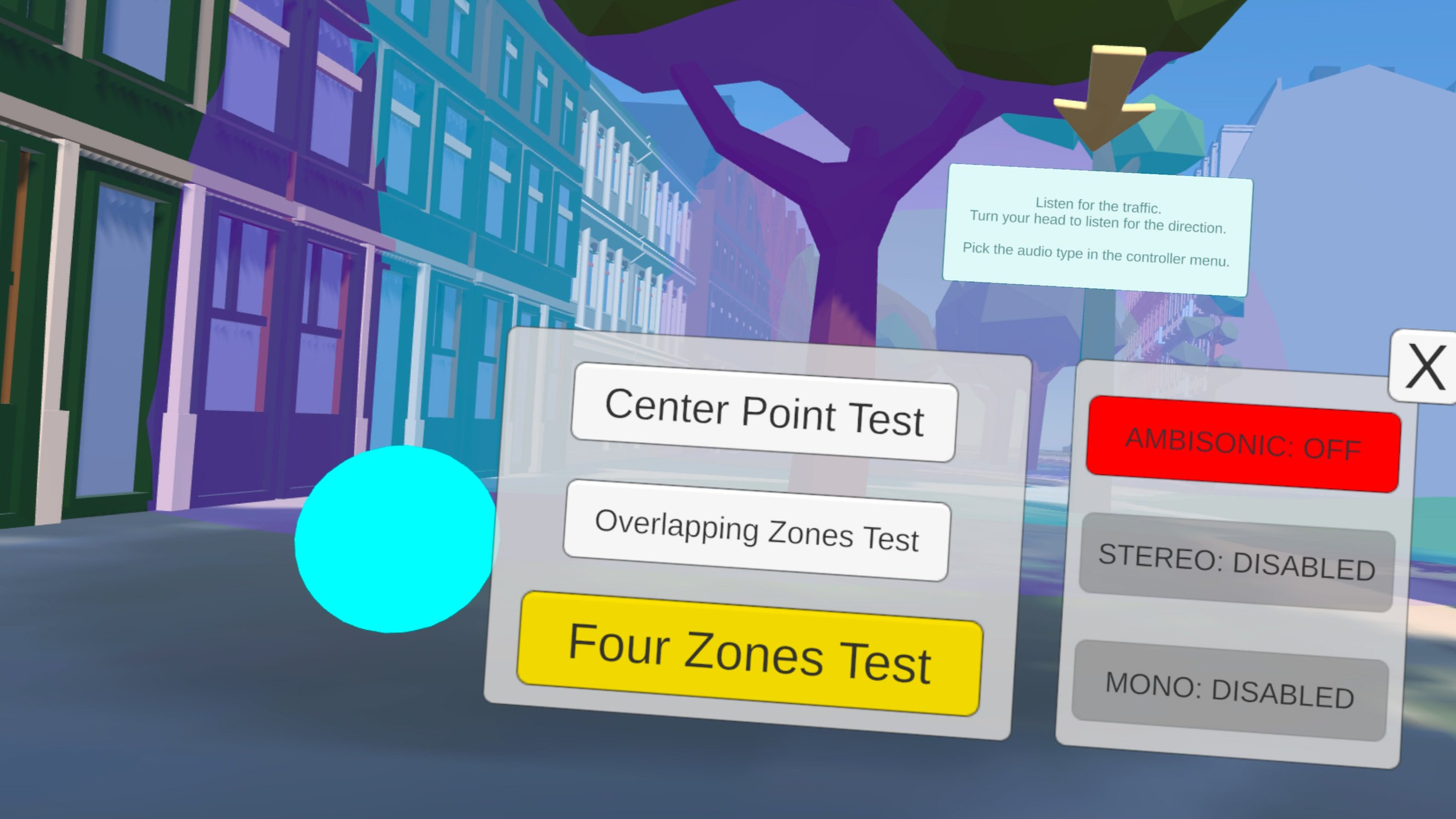
Ambisonic Playground is an immersive audio testing environment built for my final project at Future Games. It explores how first order ambisonics compares to stereo and mono recordings in VR and how different audio zone layouts affect immersion. The project includes original field recordings made with the Rode NT-SF1 and was fully implemented and optimised in Unity.
Project goal
The goal was to understand how ambisonic audio behaves inside a real VR environment and to identify best practices for implementing 360 degree ambiences in Unity. The project includes a structured series of tests ranging from a single ambisonic source to multi zone overlapping ambisonic areas. All findings are backed up by real recordings and VR user testing.
Core problem
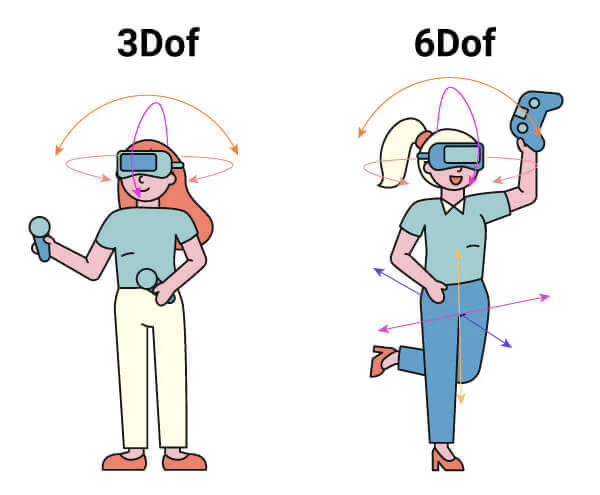
Ambisonics only supports three degrees of freedom. The recording rotates correctly when the user rotates their head, but the audio does not change when the user moves through space. This means the spatial realism breaks when the player walks too far away from the ambisonic capture point.
This VR app was created to find the best practical solutions for this.
Experiments inside the VR app
Test 1
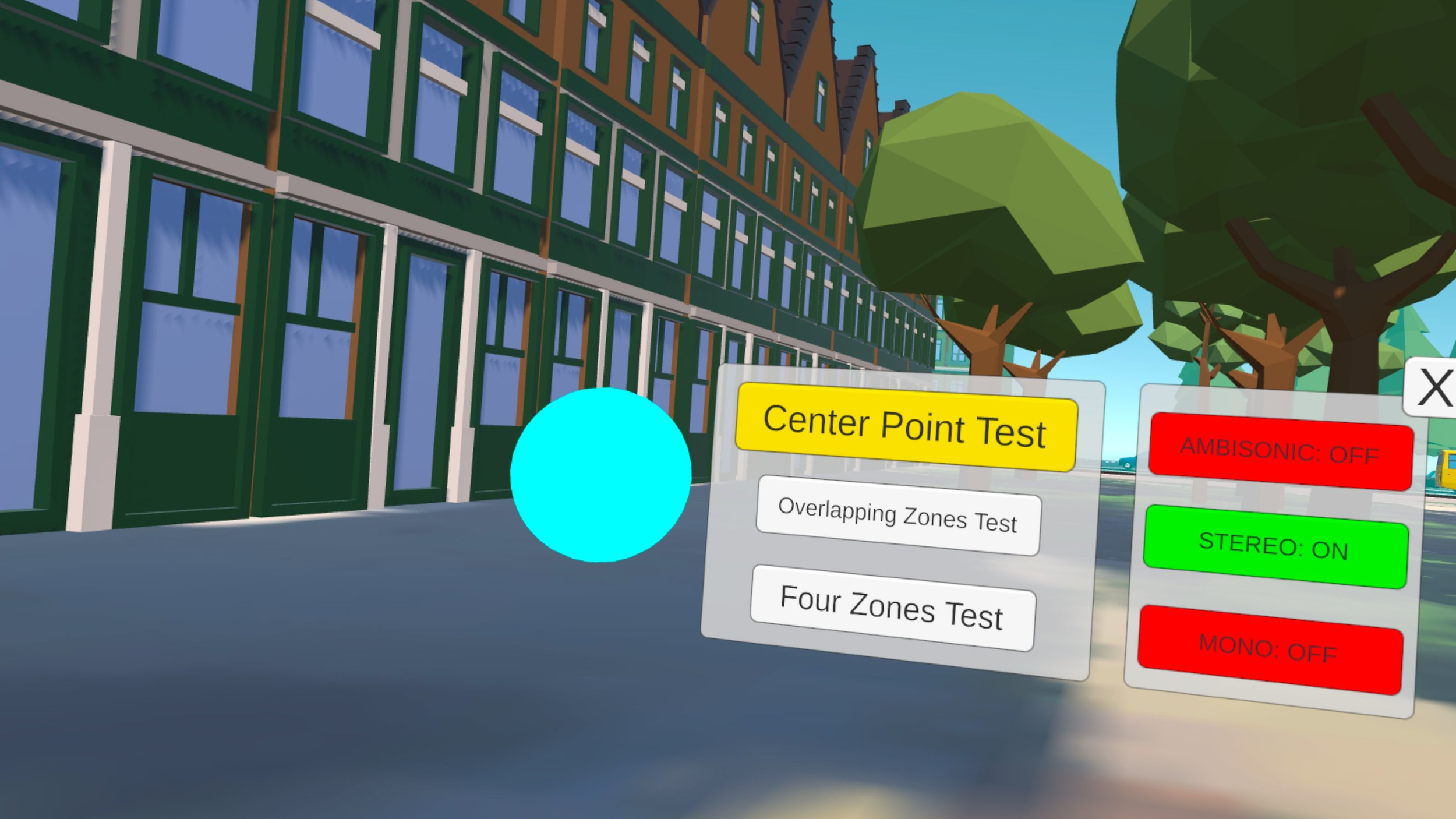
One large ambisonic source placed in the center of the scene. Used to see if a single ambisonic sphere can cover a full environment.
Conclusion
Works only if the player does not move very much. Spatial realism breaks in large environments.
Test 2
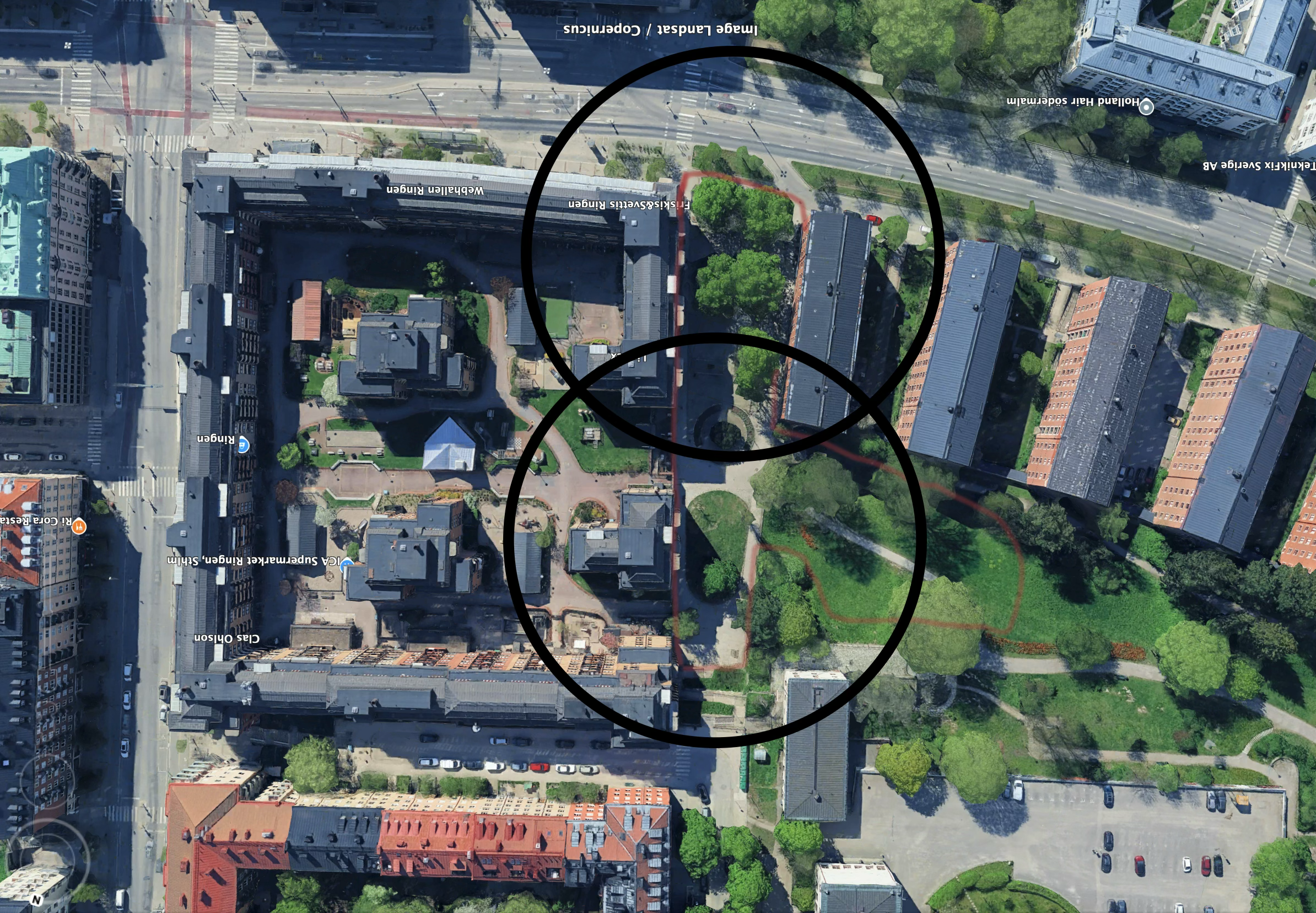
Two ambisonic zones with a crossfade.
Goal was a smooth transition between two different environments.
Conclusion
Crossfading is essential. Needs large overlap to avoid sudden changes. Works well if recordings are similar in sonic character.
Test 3
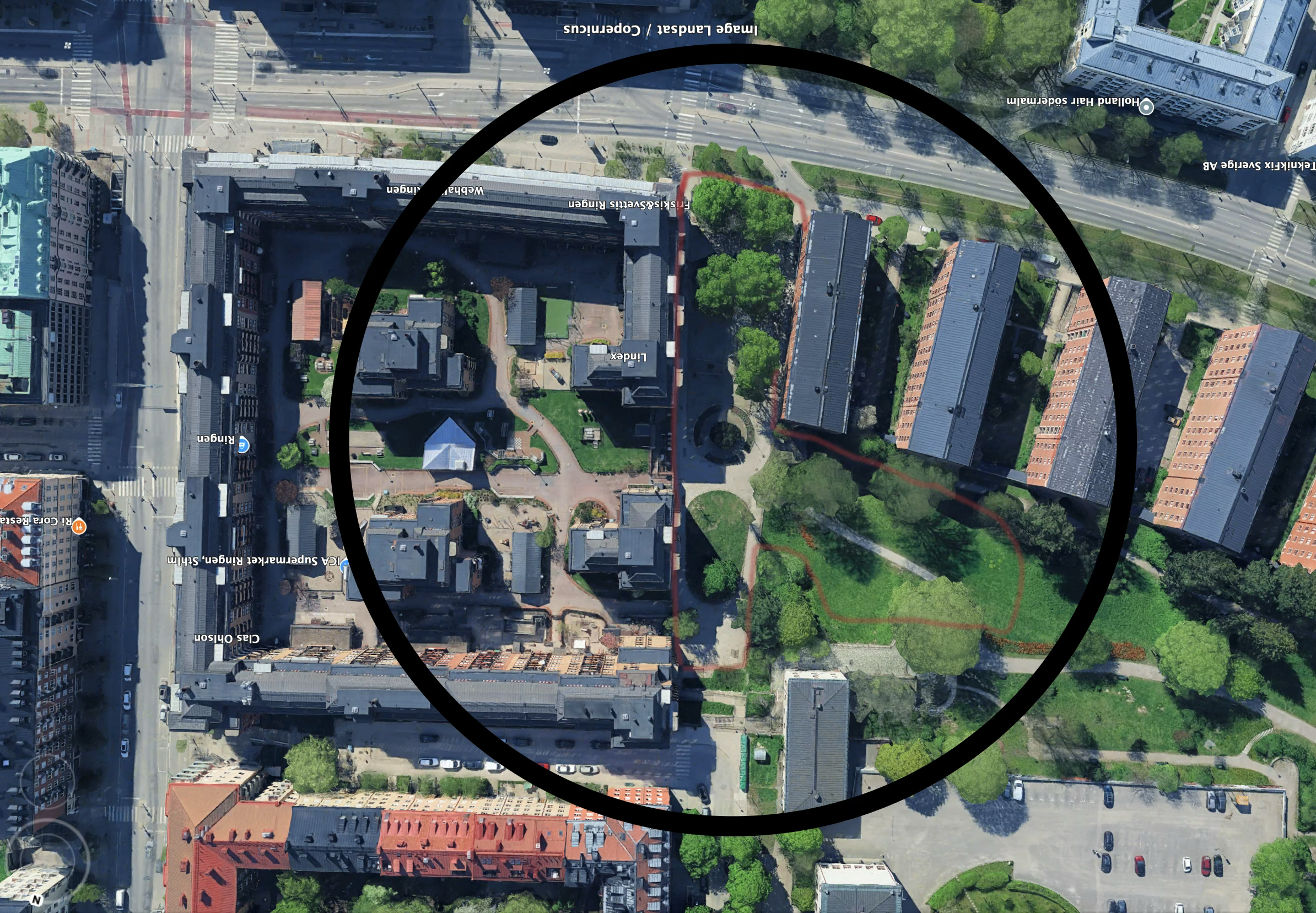
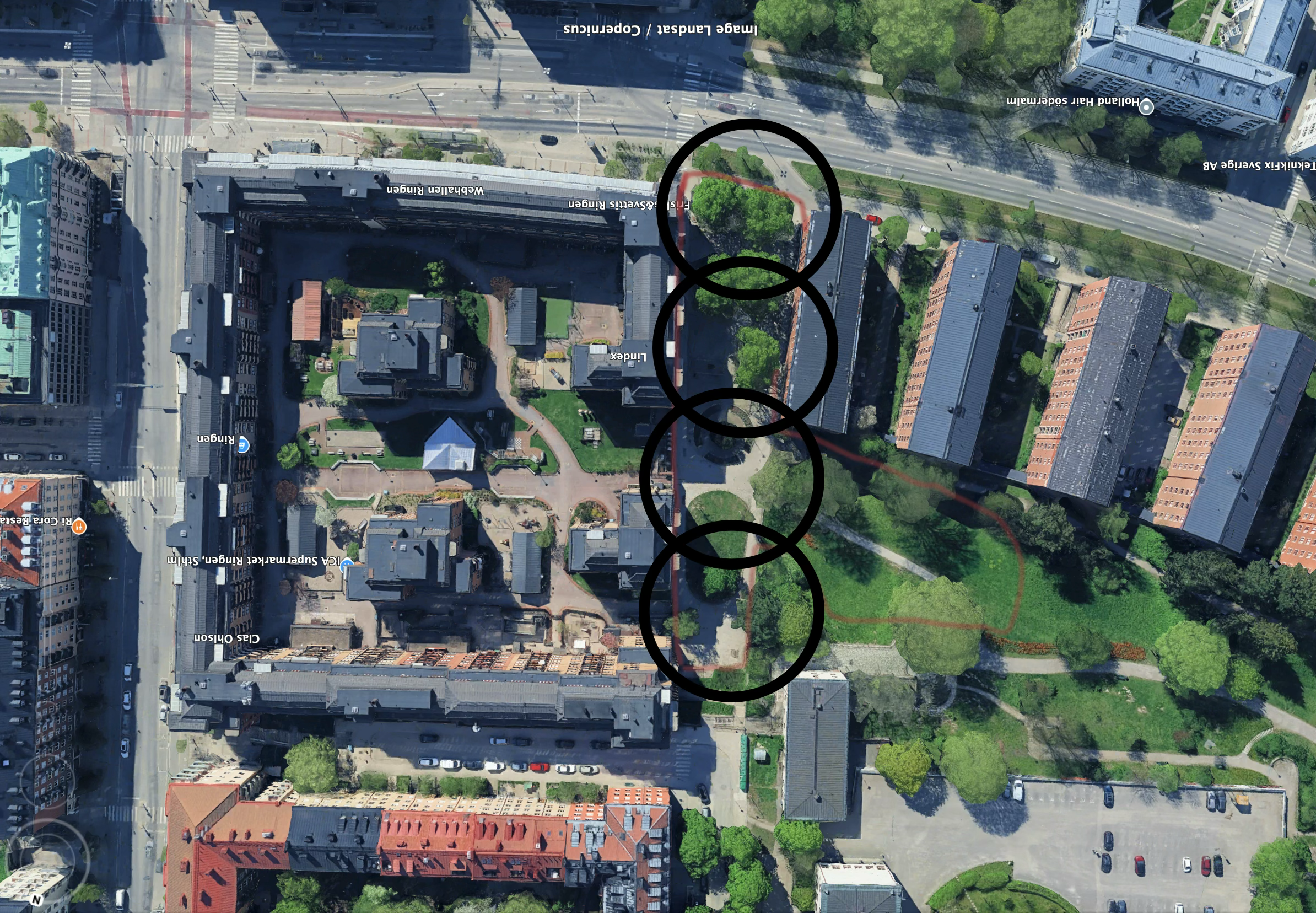
Four ambisonic zones with overlapping areas.
Designed for a dynamic park environment with a highway on one side.
Conclusion
More zones increase immersion and make the scene more believable. Four zones already give a strong sense of movement through space.
Key findings
When the player moves a lot, multiple ambisonic zones with overlap produce the most believable result.
First order ambisonics is much more immersive than stereo or mono, especially for environmental ambience.
Ambisonics is best for ambience and atmosphere.
Mono sources are best for specific, localized sounds.
Good field recording technique is critical because noise floor, wind, and environmental inconsistency can ruin a VR ambience.
Best practices
Use ambisonics for the world and the environment.
Use mono spatialised sounds for events, close objects, and moving sources.
Record locations that match the VR environment in acoustic character.
Use long and smooth crossfades between ambisonic zones.
Keep the ambisonic ambience low in the mix when many mono sources play on top.
Avoid placing the microphone close to identifiable sound objects, because ambisonics locks their position.
Record test clips and evaluate before committing to a full session.
Closing statement
Ambisonic Playground combines research, field recording, technical audio implementation, and VR design. It demonstrates how spatial recording technologies behave in a real interactive environment and provides a practical guide for achieving believable ambience in VR. This project reflects my ongoing focus on spatial audio for interactive media and my goal to push immersion forward through audio.

Read the full academic paper for this project